
There is a stubborn myth that search engine optimisation is a bag of clever tricks — secret keywords, sneaky tags, some magic phrase that pushes you to the top overnight. It is not. Good SEO is far less exciting and far more durable than that. It is a set of foundations you build into a site before it ever goes live, so that when search engines arrive, they can read your pages, understand them, and show them to the right people.
If you are a business owner about to put a new site into the world, this is the checklist worth caring about. None of it is exotic, and all of it is the difference between a site that quietly earns its place in results and one that never gets found at all.
Start with the thing most sites get wrong: being findable
Before you obsess over keywords, make sure a search engine can actually reach and read your pages. It sounds obvious, yet the most common launch mistake we see is a site that has accidentally told Google to stay away. During development, teams often add a noindex tag or a blanket "disallow" rule in the robots.txt file to keep the unfinished site out of results. If nobody removes those before launch, your new site is invisible — no amount of content will fix it.
So the first foundation is simple: confirm the site is crawlable and indexable. No stray noindex tags on pages you want ranked, and a robots.txt file that permits the crawling you intend. This is the floor everything else stands on.
Give every page a clear identity
Each page needs a unique, descriptive title tag and a meta description. The title is the clickable headline in search results and the label on the browser tab; the meta description is the short summary underneath. Write them for humans, describe what the page actually offers, and never copy-paste the same pair across your whole site. Duplicate titles tell a search engine your pages are interchangeable — the opposite of what you want.
On the page itself, use one clear H1 that states the main topic, then structure the rest with a sensible heading hierarchy: H2s for sections, H3s for the points inside them. Headings are not decoration — they are a map that both readers and crawlers use to understand how your content is organised.
Build the technical scaffolding right
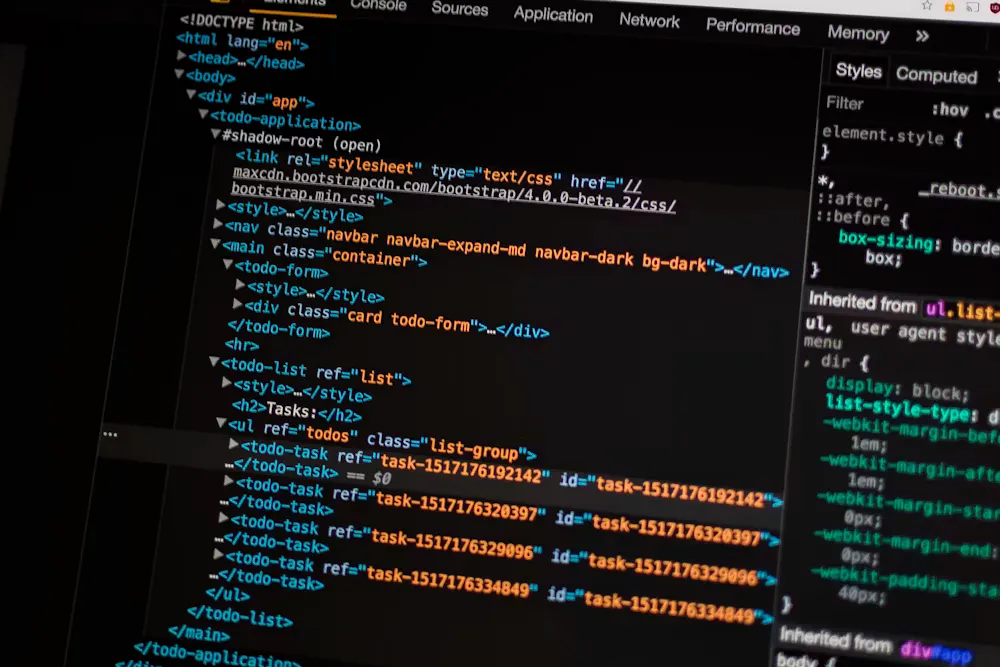
A handful of technical foundations do a disproportionate amount of work. Clean, readable URLs — /services/web-design rather than a string of numbers and codes — help people and machines guess what a page contains before they open it. Semantic HTML, using real elements like <nav>, <article> and <header> instead of an endless pile of anonymous <div>s, gives your content meaning that assistive technology and search engines both rely on.
You also want two small files doing quiet, important jobs. A sitemap.xml lists every page you want indexed, handing search engines a tidy directory instead of making them stumble onto pages by chance. A sensible robots.txt guides crawlers, pointing them to that sitemap and steering them away from pages that do not belong in results. Neither file is glamorous; both make your site easier to understand.

Meet people where they actually are
Most of your visitors will arrive on a phone, and Google indexes the mobile version of your site first. If your pages are cramped or awkward to tap on a small screen, you are penalised twice — once by frustrated users who leave, and again by a search engine that treats mobile experience as a ranking signal. Mobile-friendliness is not a nice-to-have you add later; it is a launch requirement.
Speed sits right beside it. Slow pages lose visitors before the content even appears, and Google measures the experience through Core Web Vitals — metrics for how quickly your content loads, how fast the page responds to taps, and how much the layout jumps around. You do not need perfect scores at launch, but a site that loads promptly on a mid-range phone has a real advantage.
The details that quietly compound
Several smaller foundations are easy to skip and easy to regret. Here is the short list worth handling before you launch:
- Descriptive alt text on images — a plain-language description of what each image shows. It helps visually impaired users, and it gives search engines context they otherwise cannot get from a picture.
- A logical internal-linking structure — link related pages to each other with meaningful anchor text. This helps visitors move through your site and helps crawlers discover and understand your pages.
- HTTPS everywhere — a valid security certificate is expected, not optional. Browsers flag sites without it, and it is a baseline ranking signal.
- Basic structured data — schema markup that spells out what a page is about, whether that is your business details, an article, a product or a review. Where it is relevant, it can earn richer, more eye-catching results.
For a local business — a bakery, a clinic or a studio here in Coimbatore hoping to show up when someone nearby searches for exactly what it offers — clear business schema, accurate contact details and consistent naming all help that local visibility fall into place.
Measure from day one
You cannot improve what you cannot see. Before you announce your launch, connect Google Search Console and an analytics tool. Search Console shows how Google crawls and indexes your site, which queries bring people in, and which errors need attention. Analytics tells you what visitors actually do once they arrive. Setting these up on day one means you gather data from the very first visitor instead of guessing later.
Foundations get you in the room — content keeps you there
Every foundation above earns you the chance to compete. What decides whether you win, over months and years, is something no checklist can fake: content that is genuinely useful. Search engines exist to answer questions well, so pages that clearly and thoroughly help the reader are the ones that endure. The technical work makes your usefulness legible; it cannot manufacture usefulness that is not there.
Ship these foundations with your site and you launch on solid ground rather than scrambling to patch holes once traffic — or the lack of it — reveals them. When you are ready to go further, deeper SEO & digital marketing work builds on a base that was done right from the start.