

Think about the last time a website made you wait. You tapped a link, watched a blank screen, maybe saw a spinner going round and round, and after a couple of seconds you gave up and went somewhere else. You probably didn't feel angry about it. You simply left, and you never gave that business a second thought. That quiet, forgettable moment is exactly what happens on your own homepage every single day when it loads too slowly.
The two-second mark isn't a magic number pulled out of thin air. It's roughly the point where a visitor's patience starts to run out. Below two seconds, a page feels responsive and trustworthy. Above it, the drop-off climbs sharply, and by the time you reach three or four seconds you've lost a meaningful slice of everyone who clicked. For a business that spends money on ads, social media, or word of mouth to get people to the door, that's a leak worth plugging.
Speed is really about attention and trust
We tend to treat load time as a technical detail, but for your visitor it's an emotional one. A fast page feels professional. It signals that you care about the details, that your business is switched on, and that dealing with you will be easy. A slow page does the opposite. Long before anyone reads a word of your copy or looks at a single price, the speed of your homepage has already made a first impression on your behalf.
Speed also quietly shapes how far people go. Every extra second of delay gives someone another reason to close the tab. On an online store that means fewer completed purchases. On a service business it means fewer enquiry forms and phone calls. The visitor rarely blames the speed consciously; they just feel a small friction and drift away.
Why it matters even more in India
Here in Coimbatore, and across most of India, a large share of your customers will visit your site on a mid-range Android phone, often over a mobile connection that dips in and out as they move around. A page that loads instantly on a fast office broadband can feel painfully slow on a modest phone riding patchy 4G. If your site is only ever tested on a good laptop, you may never see the experience most of your audience actually gets. Building for the slower, real-world case isn't pessimism; it's simply meeting your customers where they are.
What actually makes a page slow
Slowness usually isn't one big villain. It's a handful of small, avoidable habits stacking up. The most common culprits are worth knowing, because once you can name them you can ask the right questions.
- Huge images. A photo straight from a camera or phone can be several megabytes. Drop a few of those onto a homepage and the browser has to haul all of them down before the page settles. Images are the single biggest cause of bloat on most sites.
- Cheap or overloaded hosting. If your website shares a crowded, low-cost server with hundreds of others, every request waits in a longer queue. Good hosting responds quickly and consistently.
- Too many plugins and add-ons. Especially on platforms like WordPress, each extra plugin can pull in its own scripts and styles. A dozen of them and the browser is juggling far more than it needs to.
- Bloated, uncompressed code. Bulky themes and page builders often ship code the page never uses, and none of it is trimmed down.
- No caching. Without caching, your site rebuilds the whole page from scratch for every visitor instead of serving a ready-made copy.
How to measure it honestly
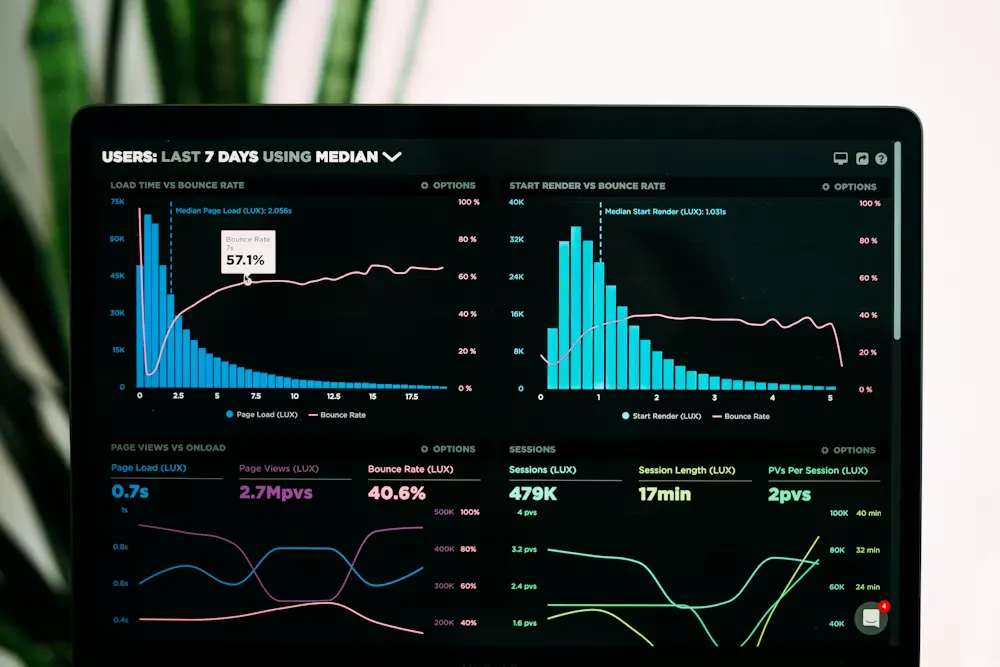
You can't improve what you don't measure, and guessing by feel is unreliable because your own device and connection aren't typical. The good news is that the best measuring tools are free. Google's PageSpeed Insights lets you paste in your web address and get a clear report on how fast your page loads, along with a plain list of what's slowing it down. It even separates the desktop and mobile experience, which matters given how many of your visitors are on phones.
When you read a report like that, don't fixate on chasing a perfect score. Focus on the biggest, clearest problems it flags first, and pay attention to what real visitors experience rather than a single lab number. If you'd like to understand the specific measurements Google now cares about, our guide to Core Web Vitals in 2026 walks through them in plain language.
Practical fixes you can ask for
Here's the encouraging part: most speed problems have well-understood solutions, and you don't need to write a line of code to benefit from them. You mainly need to know what to ask your developer or web partner to do. Here are the changes that make the biggest difference.
Start with the images
Because images cause most of the weight, they're where the quickest wins live. Ask for every image to be compressed and resized to the dimensions it's actually displayed at, and saved in a modern format like WebP, which keeps the quality while shrinking the file dramatically. Pair that with lazy loading, so images further down the page only load as the visitor scrolls to them rather than all at once up front.
Beyond images, a few reliable steps round things out. Cut plugins and scripts down to the ones you genuinely use. Move to solid, well-configured hosting rather than the cheapest option you can find. Turn on caching so returning and repeat visitors get a ready-made page. Add a content delivery network, or CDN, which stores copies of your site on servers around the world so it loads from somewhere physically closer to each visitor. And ask for the code to be minified, which simply strips out the spare characters that make files larger than they need to be.
None of these are exotic. They're standard practice, and a good developer will treat them as part of building the site properly rather than an expensive extra. If you're planning a new build, it's far easier to bake speed in from the start than to bolt it on later, which is exactly how we approach web development.
A fair, honest word to finish
Speed won't fix a weak offer, and shaving milliseconds isn't the point. The point is respect for your visitor's time. When your homepage loads in under two seconds, you remove one silent reason for people to leave before they've even met your business. It's one of the rare improvements that helps everything at once, from search ranking to sales to plain first impressions. You don't have to become a technical expert. You just have to measure honestly, ask for the right fixes, and refuse to let a slow page speak for you.