A redesign is an investment of time, money and attention, so the honest question is not "would a new website be nicer?" — almost any website could be nicer — but "is my current site actually holding the business back?" That is harder to answer, because most owners stop really looking at their own site after launch. It quietly becomes wallpaper, while customers, competitors and Google keep moving. The signs below reliably tip the scales from "leave it alone" to "this is costing us." If several feel familiar, it is probably time.
1. It is slow to load
Speed is the first impression nobody talks about. If your pages take four or five seconds to appear, a meaningful share of visitors simply leave before they ever see your offer — and they carry a vague sense that the business is a little behind the times. Slowness usually comes from oversized images, bloated plugins or cheap hosting, and it drags down search rankings too. A fix can be as small as compressing images and cleaning up scripts, or as fundamental as rebuilding on a lighter, modern foundation. We wrote more about why the target matters in our note on load speed.
2. It does not work well on mobile
More than half of the people who find you are on a phone, and often that share is much higher for local searches. If visitors have to pinch, zoom and squint, or if buttons are too small to tap and text runs off the screen, you are losing them in seconds. A redesign built mobile-first — where layouts reflow cleanly and tap targets are generous — is no longer a luxury; it is the baseline. If your site was built before responsive design became standard, this alone can justify the project.
3. You cannot update it yourself
Every time you need to change a price, add a photo or fix a typo, do you have to email a developer and wait? That dependency is a quiet tax. It means your content goes stale because updating it is a chore, and it leaves you unable to respond quickly when something in the business changes. A modern site built on a content management system puts routine edits back in your hands, so the website can keep pace with the business rather than lag a month behind it.

4. It looks dated
Design trends move, and a site that looked current five or six years ago now quietly signals "this business may not be keeping up." Tiny fonts, cramped layouts, low-resolution images and dense walls of text all age a site. Because visitors judge credibility in a fraction of a second, an outdated look erodes trust before a single word is read. A redesign brings the visual language — spacing, typography, imagery — back in line with what people now expect from a company they are considering paying.
5. High bounce, low enquiries
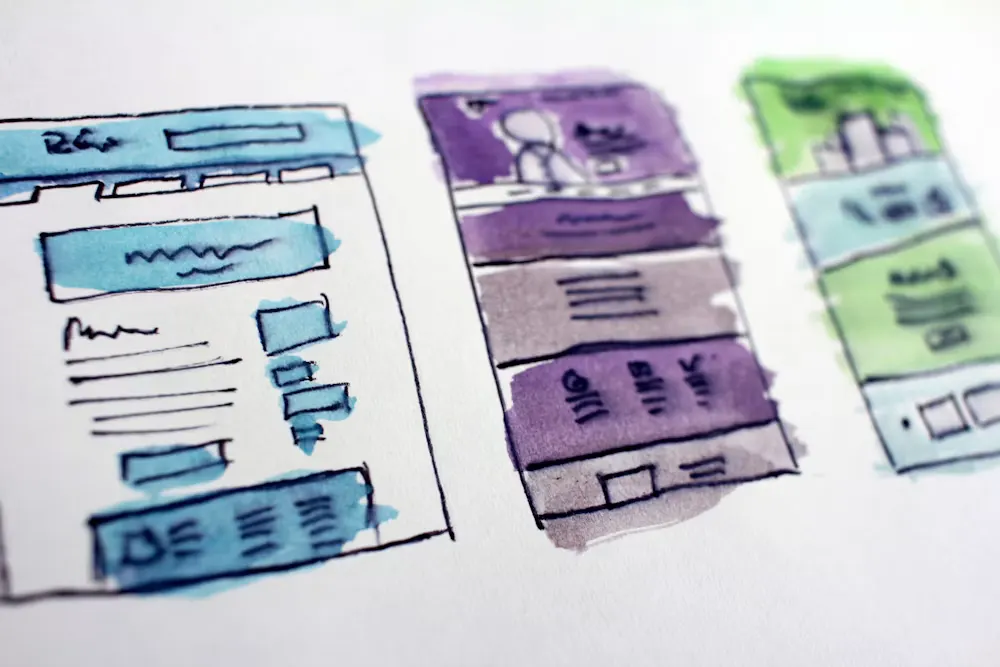
Numbers tell a story your eyes might miss. If your analytics show people arriving and leaving quickly, or if traffic looks fine but the phone is not ringing and the contact form is quiet, the site is failing at its actual job: turning visitors into enquiries. The cause is often unclear messaging, no obvious next step, or a call to action buried at the bottom. A redesign grounded in website design that leads with a clear message and an easy path to contact you can lift conversions without adding a single new visitor.
6. It is hard to find on Google
A beautiful site nobody can find is a billboard in a basement. If you never appear for the services you offer, weak SEO is often the culprit — thin content, slow pages, missing titles and descriptions, or a structure search engines struggle to read. Older sites frequently carry technical debt that quietly suppresses rankings. A redesign is the natural moment to rebuild with clean markup, sensible page structure and content written around what customers actually search for.
7. It is not accessible
Accessibility means people using screen readers, keyboard navigation or simply needing higher contrast can still use your site. Beyond being the right thing to do, it widens your audience and overlaps heavily with good SEO and clean code. Common failings include poor colour contrast, images with no alt text, and forms that cannot be completed without a mouse. A thoughtful redesign bakes these in from the start rather than bolting them on later.
8. Inconsistent, off-brand design
When different pages use different fonts, colours and button styles — usually because they were added piecemeal over the years — the site feels stitched together and a little unprofessional. Consistency is what makes a brand feel deliberate and trustworthy. Watch for these tell-tale signs:
- Logos or colours that no longer match your current branding
- Several button and heading styles competing on one page
- Photos in clashing styles, some crisp, some pixelated
A redesign resets everything to one coherent system, so every page looks like it belongs to the same company.
9. Outdated or insecure technology
If your site still loads over plain HTTP rather than HTTPS, browsers now flag it as "Not secure" — a warning your visitors see before they see you. Sites built on abandoned frameworks or long-unpatched plugins are also easy targets for hackers, and a defaced or hijacked site can undo years of reputation overnight. Migrating to a secure certificate and a maintained, modern stack protects both your customers and your credibility.
10. It no longer reflects what you do
Businesses evolve. You may have added services, dropped others, moved into new markets or repositioned entirely — while the website quietly describes the company you were three years ago. When your best salesperson is telling visitors the wrong story, that is a clear redesign trigger. For a local business in Coimbatore especially, a dated or inaccurate site steadily loses customers to competitors whose sites feel current, fast and clearly on-message. The website should say, accurately and confidently, what you do now.
Redesign or a lighter refresh?
Not every problem needs a full rebuild. If your foundations are sound and only one or two signs apply — a slow homepage, some tired imagery — a targeted refresh may be smarter and cheaper than starting over. But when several signs stack up, or the underlying technology is holding you back, patching only postpones the real fix. Either way, tie the decision to goals: more enquiries, better rankings, easier updates, a brand that matches reality. Start from what you want the site to achieve, and let that — not fashion — decide how far the work goes.